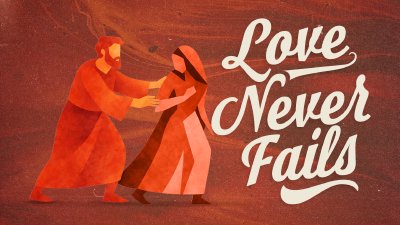
Love Never Fails | Hosea: Part 1 | When God Pursues the Unfaithful
Have you ever felt like you’ve gone too far to be forgiven? Like the distance between you and God is too great? In this compelling message from Big Valley Grace Community Church, we open the book of Hosea — and what we find is one of the most raw, shocking, and beautiful pictures of God’s love and mercy in all of Scripture.
Through the unlikely story of a prophet commanded to marry an unfaithful woman, God delivers an unmistakable message to his people: I have not given up on you. When hardships reveal what’s really in our hearts, when sin shapes and damages our relationships, God’s promises still give us hope.
If you’ve been carrying shame, guilt, or the fear that you’ve gone too far — this message is for you. Discover how God’s mercy meets us in our worst moments, why love that never fails isn’t just a saying but a biblical promise, and what it looks like to receive grace you didn’t earn and don’t deserve.
This is week one of our series Love Never Fails, exploring the book of Hosea.
📖 God isn’t done with you. His mercy is still available.
#LoveNeverFails #BookOfHosea #GodsLoveAndMercy #BiblicalHope #ChristianFaith
Life Group Questions
GROUPQUESTIONS
KEY TEXT: Hosea 1:1-11
LOVE NEVER FAILS—Receiving Mercy
Feb 14/15, 2026
Read Hosea 1:1-11
Discussion Questions:
- How have you been shown mercy by someone?
- When the circumstances of life get hard, do you find yourself running toward God or toward your sin?
- Why do you think the enemy tries to attack us when things are hard?
- How has sin/unfaithfulness impacted a friendship or relationship that you’ve had?
- Why do you think God compared Israel to an unfaithful woman?
- How might we be similar to Israel today in our unfaithfulness?
- What are ways that Christians today can be unfaithful to the Lord?
- How does it make you feel to know that God pursues us in our unfaithfulness?
- How would you describe God’s love and mercy?
- How has God shown you mercy?
Key Scriptures
Hosea 1:1 — Core Passage
Introduction of Hosea the prophet; historical context of kings of Judah and Israel.
Hosea 1:2
God commands Hosea to marry an unfaithful woman as a living illustration of Israel’s unfaithfulness to the Lord.
Hosea 1:3
Hosea marries Gomer, daughter of Diblaim; she bears him a son.
Hosea 1:4–5
First child named Jezreel — a warning of coming judgment on the house of Israel.
Hosea 1:6
Second child named Lo-ruhamah (“No Mercy”) — God’s judgment declared against Israel.
Hosea 1:8–9
Third child named Lo-ammi (“Not My People”) — God declares the covenant relationship broken.
Hosea 1:10 — Core Passage
God reverses the curse: Israel will be called “children of the living God”; God’s promise to Abraham will stand.
Exodus 10:27
God hardening Pharaoh’s heart — used to illustrate how hardships reveal what is already in the heart.
Matthew 5:7
“Blessed are the merciful, for they shall receive mercy.” — Jesus on the call to show mercy.
1 John 1:9
“If we confess our sins, he is faithful and just to forgive us our sins and to cleanse us from all unrighteousness.”
Ephesians 2:4–5 — Core Passage
“But God, being rich in mercy, because of the great love with which he has loved us… made us alive together with Christ.”
1 Peter 2:10
“Once you were not a people, but now you are God’s people. Once you had not received mercy, but now you have received mercy.”
Jude 1:2
“May mercy, peace, and love be multiplied to you.” — Closing benediction.
View Transcript
When you bounce back this time, show no mercy, man. Trust me. Join Cobra. No mercy. You’ve got to stop praying for the good of your enemy and pray that God remove your enemy from the face of the earth. I want to talk about the no mercy challenge. I don’t move. I win. I win. That’s my job. That’s what I do. No mercy.
I feel like that’s a message I see a lot when I’m scrolling through my phone, looking through social media. It may not be as blatant as those clips we just saw, but I think it’s underlying a lot of what people post — a lot of people’s thoughts and ideas as they consider people they don’t agree with, or people they feel like have hurt them. That’s the message: no mercy.
But aren’t you grateful that God has shown mercy to us? That God would extend mercy to us? That the messages and attitudes of what we just saw on social media — that’s not God’s heart. That’s not God’s attitude. God is a God of love and mercy, and he wants to extend mercy to us today.
Today we’re starting a new series in the book of Hosea. I want to give a little disclaimer on this series. As we walk through this text over the next several weeks, there are some pretty mature themes and even some pretty strong language that God has chosen to use. So if you’re a parent of young kids, I offer this as a warning — it’s going to be a little bit PG-13. We have great kids ministries available, and if you want to take advantage of that, it’s not too late to take your kid to kids ministry. And if you decide to stay and there are any awkward conversations on the car ride home, I’m just going to say now — that’s on Hosea, not me.
But it’s not just a content warning for kids. There’s some content that I think is going to resonate in some of our hearts today, because I think there are some things God might stir up. There might be some things in your story, in your past, maybe even in your present, that you’re wrestling with and dealing with — things that God might want to meet you in. God might want you to come to him, surrender to him, and receive the mercy that he wants to give you. But there might be some hard work involved, some hard conversations. So I want you to be open and willing and ready for whatever God might have for you today.
I want to begin with a story. When I was in college, I was a music major, and for a couple of years I had to do weekly vocal lessons in classical music. We were singing songs in French, Italian, and German. You had to put in a lot of work — not just on the music itself, but going through dictionaries to translate all the words, figure out the meaning, and understand how to properly pronounce everything. And people took it very seriously.
So I would show up for these lessons — just me, a piano accompanist, and the professor, who was a professional opera singer. We’d spend an hour on what I had prepared. I came in for one of these lessons having had a very busy week, overcommitted to too many things. I showed up having not prepared at all. I hadn’t put in any work that week. And we’re about to have an hour-long lesson.
We do some warm-ups. I’m not even in the room five minutes. The professor says, “Stop. You did not prepare one minute this week. You’re going to leave this room, and you’re not coming back until next week when you’re prepared.”
You can imagine all the things I felt in that moment. I felt embarrassed. I was upset — not at him, but at myself, because what he said was true. I hadn’t put in the work.
But as I look back on that moment, I’ve come to realize he actually extended to me really great mercy. Because what he could have done was let me struggle and squirm and embarrass myself for an hour straight. And he didn’t. Instead, he cut it off. He extended mercy to me. And you better believe the next week when I came back, I was prepared — and he welcomed me in with open arms. He was very merciful.
I want you to consider: where in your life has someone extended mercy to you? Maybe you had done something wrong and somebody showed you incredible kindness, incredible mercy. As we walk through the book of Hosea and this passage today in chapter one, I want you to consider what are the places where God has been merciful to you. We’ll come back to that at the end.
So as we begin in the book of Hosea, we’re calling this series Love Never Fails. Looking at those words, you might think, I don’t agree with that. Love does fail. Maybe you’ve experienced failures in love. Maybe you’ve experienced betrayal, hurt and pain, divorce. Maybe you’ve had a friend who turned their back on you. You may have experienced a love that fails. But when we talk about a love that never fails, there’s only one love we’re talking about — the love of God. Because God’s love never fails. God is love. He loves us. And that will never fail.
Now, we started this series last night on Valentine’s Day, which I thought was super fun. And I’m one of the only single pastors on staff, so I think they made me preach so the other guys could go out on a date night — that’s my theory.
The book of Hosea, while it deals with marriage, is not exclusively about marriage. As a single pastor, I’ve taught a lot of messages and read a lot of passages dealing with marriage. Even the Apostle Paul, who writes a lot on marriage, was a single man. But the book of Hosea is not primarily about marriage. What we’re going to see in this passage is a story of a marriage given as an example to illustrate the relationship between God and his people. And in fact, that’s what our marriages are supposed to be. If you’re married and you’re a believer, your marriage is supposed to be an illustration to the world around you of the relationship between Jesus and his church. Throughout scripture, God uses the illustration of marriage to represent his relationship with his people, the people of Israel.
My hope is that as we walk through this, you’re going to see yourself in the story — that you’ll see yourself in the nation of Israel — and you’ll understand something more about your relationship with God and his love and mercy for you. Let me pray for us and we’ll dive in.
Lord, thank you for this beautiful illustration. This is a book that sometimes we don’t spend a lot of time in, and maybe it’s not familiar, but Lord, the things you record here are for us today. Would they speak to our heart? Would you speak to our heart through this text and through your Holy Spirit? Help us to learn, help us to grow, and to receive the love and the mercy that you have for us. We ask in Jesus’ name. Amen.
Hosea chapter one, verse one: “The word of the Lord that came to Hosea, the son of Beeri, in the days of Uzziah, Jotham, Ahaz, and Hezekiah, kings of Judah, and in the days of Jeroboam the son of Joash, king of Israel.”
In this first verse, we get a lot of the context for what we’re going to read in this book. We’re introduced to Hosea, a prophet of God — a person God chose to speak his message to his people. There were actually many prophets living at the same time who even knew each other. Hosea is a prophet at the same time as Isaiah and Jonah. In this first verse, we’re told about five different kings. The nation of Israel had been divided — essentially a civil war had split it into two kingdoms: the northern kingdom called Israel, and the southern kingdom called Judah.
We’re given a list of four kings in Judah. Of those four kings, only one of them was good — that’s Hezekiah. The other three did evil in the sight of the Lord. And if you go through the list of all the kings of the northern kingdom, one hundred percent of them did evil in the sight of the Lord. So Hosea is going to deal primarily with the northern kingdom of Israel, where the king is named Jeroboam, and he’s going to be significant later in the story.
During this time period, Israel had been in a time of turmoil — horrible leadership, no direction, external pressures, internal problems — and all of that had led them to sin against the Lord. All of that had led them to turn their back on God and instead worship a false god, the Canaanite god named Baal.
You know, it’s interesting how when things get hard and difficult — like they were for Israel, like they can be in our own lives — those tend to be the moments we’re most vulnerable to the attacks of the enemy. Those tend to be the moments when we’re most tempted to sin. Israel was in a place of pressure, and they gave in to their sin. What do you do when you face pressure? Do you turn to your sin, or do you turn to your Savior?
When sin enters the equation because of those pressures, maybe things are stressful at work so you get home and buy something you don’t need because you think it’s going to make you feel better — free two-day shipping, right? Maybe you’re overworked and you take it out on your family. Maybe you overindulge in things you shouldn’t. When those pressures are applied, how do you respond? How do you react?
The first point this morning is that hardships reveal the heart. When the pressure is turned up, when things get hard, what’s on the inside tends to come out. And what we see with Israel is that in this place of turmoil, bad leadership, and troubles, what came out was not devotion to the Lord — it was turning away from God to their sin.
If you go back to when the Israelites were slaves in Egypt, God sends Moses to speak to Pharaoh and say, “Let my people go.” It says in Exodus 10:27, “The Lord hardened Pharaoh’s heart and he would not let them go.” Four times in the story it says God hardened Pharaoh’s heart. I remember reading that as a kid and thinking, is God changing Pharaoh’s heart to be against the people of Israel? Is that what’s happening?
If you look carefully at Pharaoh’s character, there doesn’t seem to be any circumstance under which he would have been happy to let the people go. So what is this verse actually describing? If you look at the Hebrew, the best illustration I can come up with is a sponge. If you hold a sponge in your hand and begin to squeeze it — begin to apply pressure — what happens? Whatever’s on the inside begins to come out. That’s what’s happening. As God hardened Pharaoh’s heart, he was applying pressure. Moses is speaking to him, plague after plague, sign after sign. God is putting on the pressure. And what’s on the inside of Pharaoh comes out — his attitude and his heart are revealed.
Hardships reveal the heart. When God puts on pressure, when things in life get hard — what comes out? What’s on the inside, and how does that leak out in those moments of challenge and difficulty?
That’s what happened with Israel. God applied the pressure, and what came out was sin. They turned their back on God. And so now God is going to do something absolutely shocking. He’s going to use the prophet Hosea to deliver a message so extreme and so vivid that they cannot miss it — they will not be able to deny what God is trying to communicate.
Hosea 1:2: “When the Lord first spoke through Hosea, the Lord said to Hosea, ‘Go, take yourself a wife of whoredom and have children of whoredom, for the land commits great whoredom by forsaking the Lord.’”
Immediately, this starts off really intense. Imagine you’re Hosea, thinking, “God has chosen me to be one of his prophets. I get to communicate the word of the Lord to the people. God, what do you have for me?” And the first thing God tells him is this: you’re going to go marry a woman God describes here as a woman of whoredom — your translation might use the word prostitute. Both are communicating the same thing: an unfaithful wife.
Why? Because God is drawing a parallel. He’s making a link. This woman is going to represent the people of Israel. Just as they have been unfaithful — instead of worshiping God alone, they’ve turned and worshiped a false god — God says, “You, Israel, are like a prostitute.” And Hosea is going to go marry her. Why? Because Hosea is going to be the stand-in, the representation of God — choosing to enter into this relationship, choosing to pursue her, choosing to be with her. This is pretty intense.
Now, is this what God is asking all of us to do today? Is this some sort of application? No. This is a moment in time when God is doing an extreme sign to make an extreme point to his people. If you read through all the writings of the prophets, you see that God used the prophets to do some very extreme things to make a point. Some of the things the prophets did, if they did them today in the city of Modesto, they would be arrested — because they were intense, because God wanted to communicate a message that the people would not miss.
What a contrast: on one side, a prophet, a spokesperson of God representing the Lord; and on the other side, a prostitute, an unfaithful woman — the exact opposite of the character of God.
Verse three: “So he went and took Gomer, the daughter of Diblaim, and she conceived and bore him a son.” He finds this woman, Gomer. He marries her. And they’re going to have three children. The names of these children are going to represent the consequences of Israel’s sin against the Lord. Just as children are the fruit of a relationship, these names are going to represent the fruit of the sin that has entered the relationship between Israel and God. They’re going to represent the consequences.
This leads me to the second point: sin shapes relationships. When sin enters in — it doesn’t matter what kind of relationship we’re talking about — it’s going to have an effect. Whether it’s a friendship, a family member, or a spouse, sin shapes relationships. Betrayal can produce a lack of trust. Abuse can produce fear. Unresolved conflict can produce resentment. As a church, we want to be a resource for you in those things. We have tools and resources to help you navigate them — our lay counseling ministry, Celebrate Recovery, and the marriage class starting next week are all ways we come alongside people.
But what we’re going to see is that in the relationship between God and Israel, sin has entered the equation, and there are consequences. And it’s going to be illustrated by the names of these three children.
Before we get into what those names are — because they’re really bad names, I would not name my kid any of these things — I did some research. In 2025, the most popular baby names for girls were Olivia, Amelia, and Charlotte. For boys, it was Noah, Liam, and James. Great names. But if there are great names in 2025, it also means there are some bad ones. Did you know there are names you legally cannot give your child? It’s different based on where you live.
In Brazil, you cannot name your child Samba. In Italy, you cannot name your kid Friday — how are you going to schedule a playdate? In the United States, you cannot name your child Nutella — it’s there because somebody tried. In Mexico, you cannot name your child RoboCop. In Arizona, you cannot name your kid Judge — I think that’s a mistake; if you live in a state where you can wear a cowboy hat, you can name your kid Judge. In New Jersey, you cannot name your kid R2-D2 — again, somebody tried. And in Utah, you cannot name your child Santa Claus. There can only be one.
Well, in this passage, God is going to tell Hosea what to name his kids. And let me tell you, these names are not cute. They’re not making anybody’s top ten list. They’re pretty harsh — and they were meant to be a reminder. When Hosea would introduce his family, people would hear these names and shudder when they understood what they meant.
Verse four: “The Lord said to him, ‘Call his name Jezreel, for in just a little while I will punish the house of Jehu for the blood of Jezreel, and I will put an end to the kingdom of the house of Israel. And on that day I will break the bow of Israel in the valley of Jezreel.’”
When you hear the name Jezreel, you probably have no reaction. But let me give you an equivalent. If you were to name your child Hiroshima today — when you think of Hiroshima and the US dropping an atomic bomb, innocent people dying — there’s a lot of weight mixed into that name. That’s what Jezreel would have felt like to them.
Here’s the story of Jezreel. At this time, the king in northern Israel was Jeroboam, the great-grandson of King Jehu. God had sent Jehu to the valley of Jezreel to carry out punishment — an entire family line had turned their back on the Lord and worshiped Baal. Jehu goes to wipe them out, and he does it brutally. In fact, he goes above and beyond — too far. An entire dynasty is wiped out. And then Jehu turns around and does the exact same thing — he worships the same god. So God says, “Name your kid Jezreel” — a reminder of what happened, and a warning that the same thing is going to happen to the people of Israel. Harsh, brutal — not a good name. It points to the consequence of their sin.
Second child. Verse six: “She conceived again and bore a daughter. And the Lord said to him, ‘Call her name Lo-ruhamah, for I will no more have mercy on the house of Israel to forgive them at all.’” Her name in Hebrew means “No Mercy.” The idea: Israel, you’re going to get what’s coming to you. You’re going to face judgment. It’s not going to go well. You’re getting what you deserve. No mercy.
Imagine being Hosea — married to a prostitute, and everywhere he goes, when he introduces his children, those are their names. Jezreel. No Mercy.
Then they have a third child. Verse eight: “When she had weaned Lo-ruhamah, she conceived and bore a son. And the Lord said, ‘Call his name Lo-ammi, for you are not my people and I am not your God.’” Just sit with that. The Hebrew name Lo-ammi means “Not My People.” God is essentially saying to his people, “The relationship is over. It’s done. It’s finished.”
Maybe in some way you’ve experienced these three names in your own life. Maybe you’ve heard phrases like, “I’m warning you. You’ll get what you deserve. It’s over. We’re done.” That’s what the people of Israel are hearing through the prophet Hosea on behalf of the Lord.
There are consequences to sin. Even for us today — if we have a relationship with Jesus Christ and we’ve been forgiven, there are still consequences to our sin. The Bible says the Lord disciplines those whom he loves. We could do something wrong, receive forgiveness, and there may still be discipline God needs to carry out. There can be natural consequences to our sin. Our prayers can be hindered. Our relationship with the Lord can feel distant if we’re in rebellion to him. When sin enters the picture, it shapes relationships. It messes things up.
So here’s Hosea: married to a prostitute, with three children with really bad names. All you need to do is throw a tractor in the mix and you’ve got a country song. But is all hope lost? Has love failed?
No.
Because the third point this morning is that God’s promises give hope. Here’s the turning point in the passage. Even though Israel has failed, God will not fail them. His love will not fail.
Verse ten: “Yet the number of the children of Israel shall be like the sand of the sea, which cannot be measured or numbered. And in the place where it was said to them, ‘You are not my people,’ it shall be said to them, ‘Children of the living God.’ And the children of Judah and the children of Israel shall be gathered together, and they shall appoint for themselves one head, and they shall go up from the land, for great shall be the day of Jezreel.”
See what God is doing? He’s flipping it all on its head. God had made a promise to Abraham that from him God would multiply his descendants — as many as the stars in the sky or the sand of the sea. And God is not going to let that promise fall. Even though they have been unfaithful, God says it’s still going to happen. God is making his promises come true. God never fails.
Instead of coming to an end in judgment, God’s going to multiply them. Instead of being cut off from relationship with God, they’re going to be considered his children. Instead of a dynasty being destroyed, the people of Israel will be reunited — the northern and southern kingdoms will come together, united under one king, the Lord himself.
And all of this — it’s not just the story of a prostitute. It’s not just the story of the failure of Israel. It’s the story of the faithfulness of God. Hosea represents the Lord as he pursues this woman and marries her in spite of her unfaithfulness. That’s what God does for us. In spite of our unfaithfulness, in spite of our sin, God is faithful to us.
What has God promised us? Jesus said he would never leave or forsake us. He’s with us. He won’t leave us. There is nothing you can do that will make Jesus turn his back on you. In fact, the Bible says nothing can separate us from the love of God. Nothing. You can’t do anything so bad that God would say, “Well, that’s enough. We’re done.” First John 1:9 says, “If we confess our sins, he is faithful and just to forgive us our sins and to cleanse us from all unrighteousness.” God is faithful. These are the promises of God. We can rest in them and trust in them. No matter how much we mess up, all we have to do is turn back to him, and he will extend mercy. He will show grace. He will love us just the same.
God keeps his end of the deal because God is merciful. Because God is love, and his love is a love that never fails.
So what happens to Hosea? This week is kind of a cliffhanger, and I want to invite you to come back next week because the story of Hosea is going to get worse before it gets better. Hosea is going to go through a lot — and all of it to illustrate how much God loves us. As we walk through this book together, we’re going to see God extending mercy time and time again.
I think we live in a time and a place where it’s hard for us to extend mercy to other people. Our natural reactions when we don’t like things — we tend to judge, condemn, reject, hate, cancel, quit, divorce. Those might be some reactions you’ve experienced, or things you’ve done. Seldom do we show mercy.
But what did Jesus say in Matthew 5:7? “Blessed are the merciful, for they shall receive mercy.” Why should we show mercy? Because God has shown mercy to us.
I want to read you a story from someone in our church. This is from Mitch, who is a part of our Celebrate Recovery ministry. He says: “Before Celebrate Recovery, I believed my rebellion with alcohol and drugs had put too much distance between God and me. I was carrying shame, guilt, and the fear that I had gone too far to be forgiven. Celebrate Recovery gives me a safe place to be honest about my struggles and to stop pretending I have it all together. Through the people, the process, and the constant reminders of God’s love, I began to see that God’s mercy was still available to me. Even after everything I had done, I learned that God wasn’t disappointed or done with me. He was patiently waiting for me to come back. Celebrate Recovery helped me experience his mercy in a real, personal way and renewed my trust in him.”
What a great testimony — coming to understand that God’s mercy is waiting for you. That God is there to forgive, to offer mercy, and to extend grace. Every single one of us has been unfaithful to God. Anytime we choose to sin, we are turning our back on the Lord and being unfaithful to him. But God is there with open arms to extend mercy.
Ephesians 2:4–5 says: “But God, being rich in mercy, because of the great love with which he has loved us, even when we were dead in our trespasses, made us alive together with Christ. By grace, you have been saved.”
This morning, there’s an action step I’d like everyone to take. As you came in today, you should have received a card with the Love Never Fails logo on the top. I’m going to ask that you take this and answer one question: How has God shown you mercy? How have you received mercy from God? You could take the card home, spend some time in prayer about it. But also right out here in the lobby, we’ve put up a wall — and you’ll see the question listed there, along with the questions for the next two weeks. Every week in this series, after the message, we’ll have an opportunity to respond to a question. By putting your response on that wall, you’ll be encouraging the rest of our church family as they see all the ways God has shown mercy to each person in this room.
If you’re not sure where to start, 1 Peter 2:10 is a pretty good one: “Once you were not a people, but now you are God’s people. Once you had not received mercy, but now you have received mercy.”
God has been so faithful and so gracious. He’s extended mercy to all of us. Maybe you’re here today and there are some things in your life you haven’t dealt with, things you need to confess to the Lord.
In a moment, our worship team is going to lead us in a song. As they do, this is an opportunity to meet with the Lord, to speak with him, and to ask that God would extend mercy to you. Where do you need to receive mercy from the Lord today? Our pastors, elders, and their spouses are going to come and line the front of the stage. And maybe during this song you say, “I need to receive mercy, and I need to tell somebody about it. I need prayer.” Our team will be up here to pray with you — to bring these things to the Lord, to repent, to lay them at the feet of Jesus, and to receive his mercy.
God loves you. He wants to extend mercy to you. He wants to show you his grace. So this morning the invitation is simply this: receive from Jesus the mercy that he wants to give.
Jude 1:2 says, “May mercy, peace, and love be multiplied to you.”
Related messages