Core Values | Part 4 | Connect
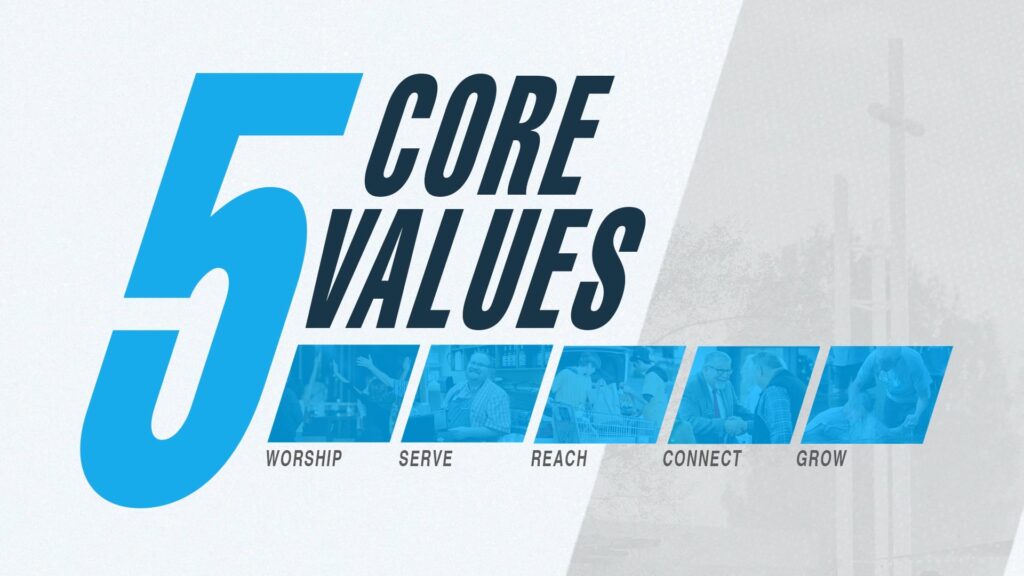
What does it mean to truly belong to a church family? In this sermon from Big Valley Grace Community Church in Modesto, California, we continue the series on the church’s five core values — worship, serve, reach, connect, and grow — with week four: connect.
Using a memorable football huddle analogy, the speaker — a former high school quarterback — pictures the church gathered to hear the “play” from our Coach, the Lord: be devoted to one another, accept one another, care for one another, bear one another’s burdens, encourage and build up one another, confess your sins to one another, pray for one another, serve one another, love one another. But the world doesn’t care about the huddle — what matters is running the play when we break: in our neighborhoods, our jobs, our everyday lives. And we can’t fulfill these “one another” commands sitting in rows looking at the back of someone’s neck — we have to get into smaller groups and truly connect.
Drawing on Ephesians 2:19 and John 1:12–13, the message shows that being a Christian means not just believing but belonging — the church is not an institution, a religious club, or a business; it is a family. The message closes with two practical steps: obey God’s word and get baptized, and be courageous — take the initiative to join a small group, a men’s or women’s ministry, Celebrate Recovery, young adults, or a life group.
If you’ve been attending church but never truly connected, this message is for you.
#Connect #ChurchFamily #SmallGroups #BigValleyGrace #Baptism
Life Group Questions
The speaker shared his five personal core values — follower of Jesus, lover of the Scriptures, husband, father, grandpa. If someone asked you to name your five core values in five seconds, what would you say? What do your time and your money say your values really are?
Why does he make a point of saying “Jesus Christ” rather than just “God” when describing his first core value? Why does that distinction matter in our culture?
What does it mean that being a Christian doesn’t just mean believing, but also belonging? Is there a difference between attending a church service and belonging to a church family?
In the huddle analogy, who is the Coach, and what is the play he has called? Which of the “one another” commands stands out to you most, and why?
Why doesn’t the world care about our “huddle”? What does it mean that the most important thing happens when we break huddle and go back to our neighborhoods, jobs, and daily lives?
Can we really fulfill all the one another principles while sitting in rows in a worship gathering? Why or why not? What does that tell us about the purpose of smaller groups?
Which one another command comes hardest for you — accepting one another, giving preference to one another, bearing burdens, confessing sins, or something else? Why?
The speaker told the story of an elderly couple who could no longer attend but were surrounded by people from their connections when they got sick. Why is being connected so important when crisis comes? What happens to people who aren’t connected to anybody?
The church isn’t an institution, a religious club, a society, an organization, or a business — it’s a family, a living organism. How does seeing the church as a family change the way we participate in it?
Why does God expect us not just to hear the word but to obey it — to “break huddle and carry out the play”? Where might God be calling you to obey something you’ve been putting off?
What does baptism have to do with connection? If you have trusted Christ but never been baptized, what holds you back? What blessings might you be missing by delaying obedience?
What role does fear play in keeping us from connecting? How does 2 Timothy 1:7 — God has not given us a spirit of fear, but of power, love, and self-discipline — speak to taking the initiative?
Why do you think fear is as old as mankind — going back to Adam hiding in the garden saying “I was afraid”? What are you most afraid of when it comes to joining a group?
Which connection opportunity is God putting on your heart — men’s ministry, women’s ministries, Celebrate Recovery, young adults, youth, Prime Time, a serve team, or a life group? What step will you take this week?
What would it look like for our group to “run the play” this week — carrying the one another commands into our neighborhoods and workplaces?
Key Scriptures
Romans 12:10
Be kindly affectionate to one another with brotherly love; in honor preferring one another.
Romans 15:7
Therefore receive one another, even as Christ also received you, to the glory of God.
1 Corinthians 12:25–26
that there should be no division in the body, but that the members should have the same care for one another. When one member suffers, all the members suffer with it; and when one member is honored, all the members rejoice with it.
Galatians 6:2
Bear one another’s burdens, and so fulfill the law of Christ.
1 Thessalonians 5:11
Therefore exhort one another, and build each other up, even as you also do.
Hebrews 10:24
Let’s consider how to provoke one another to love and good works.
James 5:16
Confess your offenses to one another, and pray for one another, that you may be healed. The effective, earnest prayer of a righteous man is powerfully effective.
Galatians 5:13
For you, brothers, were called for freedom. Only don’t use your freedom as an opportunity for the flesh, but through love be servants to one another.
John 13:34–35
A new commandment I give to you, that you love one another. Just as I have loved you, you also love one another. By this everyone will know that you are my disciples, if you have love for one another.
Ephesians 2:19
So then you are no longer strangers and foreigners, but you are fellow citizens with the saints and of the household of God.
John 1:11–12
He came to his own, and those who were his own didn’t receive him. But as many as received him, to them he gave the right to become God’s children, to those who believe in his name.
Matthew 28:19–20
Go and make disciples of all nations, baptizing them in the name of the Father and of the Son and of the Holy Spirit, teaching them to observe all things that I commanded you. Behold, I am with you always, even to the end of the age.
2 Timothy 1:7
For God didn’t give us a spirit of fear, but of power, love, and self-control.
Genesis 3:9–10
Yahweh God called to the man, and said to him, “Where are you?” The man said, “I heard your voice in the garden, and I was afraid, because I was naked; so I hid myself.”
1 Corinthians 12:12–13
For as the body is one and has many members, and all the members of the body, being many, are one body, so also is Christ. For in one Spirit we were all baptized into one body, whether Jews or Greeks, whether bond or free, and were all given to drink into one Spirit.
View Transcript
That guy right there is one of the great leaders of our church — one of the great leaders. We’ve got a lot of them. And when I saw on the schedule — or heard on the schedule — that I was following her, I thought, “Oh man, all I can do is mess it up.” Well, I’ll tell you right now — this is one of the great, maybe the greatest views in the state of California, standing up here looking out there, because I see my family. I see people that I love deeply, and I know you love me deeply. This is an incredible view. Now, yours isn’t so good — I get it, okay — but man, I just love my church. If you’re visiting with us and this is your first time here, or you’re watching online and it’s your first time with us, I want you to know you’re in the midst of just some really, really great people. It’s one of the beautiful things about the church as it comes together. Wow — what a deal.
So Lisa was telling you about the prayer wall right out there, and man, we have that — she said you’ve been praying like crazy. I took this card off the wall earlier. Pastor Joel had us out at the wall praying for names, and I’ve got these names here. I don’t know who these people are, but this card right here is like super sacred to somebody, and I know it’s super sacred to him. And probably all of you wrote a name or six on a card, and that wall out there is just really weighty — people, really weighty — and we take it super seriously. And it’s not too late — tonight you can grab a card in front of you or wherever, and go stick it out there, and by faith just believe that maybe when you invite your friend, your family member, to church, they’ll come. And just when you look at that wall — names — it’s a sacred wall of people that we’re praying for. And I just want you to know: Jake, I’m praying for you.
So I was thinking a lot about how I wanted to unpack this. We’re looking at a series where we’re going through the values of our church — the core values of our church — and I have talked through these a lot, whether from up here in sermons or doing the membership class. I would take people by our wall out there, and I can’t even tell you how many times I’ve talked about our values. I’ve had other pastors who have come and visited our church, and they want to know kind of who we are, and all I’ve got to do is take them to that wall out there. And that wall basically tells you who we are — our mission, our values. It doesn’t tell you everything about us, but it certainly tells you a whole lot about us — maybe the important stuff about us.
So I was thinking that I would share with you my values. I have five core values, and I’ve thought these through — I have spent a lot of time thinking about these, like years and decades, and I can rattle them off to you at any moment. I had to boil them down because there was a moment in history where I was being interviewed a lot — I ran for a political office, and man, I was interviewed multiple times a day, every day. And of course they would say, “Well, tell us about you.” So I had to have it pretty honed in, because you only get a second — you can only make a little-bitty statement. You know the debate or whoever or whatever group you were in, you didn’t have a long time to unpack it. But I knew my values, and so I boiled them down. And when I go somewhere and speak somewhere — a men’s conference I’ve got coming up here next month — they ask, “Hey, send me your bio.” This is what I send them — I send them my five core values basically. And they are in order of importance, okay?
And the first one is that I’m a follower of Jesus Christ. That’s my first core value. This is how I’m going to word them: I’m a follower — a disciple — of Jesus Christ. That’s what I want you to know about me. I have surrendered my life to Jesus. I’ve repented of my sin; I’ve turned from how I was living, and I repented and turned to Jesus. I’m a follower of Jesus Christ. And I make sure, on purpose, I say “Jesus Christ.” I don’t say “God,” because in our culture today — what God are you talking about? Could be any god. I want you to know it’s Jesus Christ.
Number two: I’m a lover of the ancient Scriptures. And some of you might be thinking, “Well, doesn’t that go with number one?” It should — but not in America. There are a lot of American Christians who will tell you they love Jesus, but they don’t know anything about his word. Nothing. Zero. Zilch. It’s easy to say, “Yeah, I love God” or “I love Jesus.” How long have you walked with Jesus? “Oh man, I’ve walked with Jesus since I’ve been a kid.” Hey, tell me what John 3:16 says — and they go blank. How is it that you are a follower of Christ and you can’t even rattle off maybe the most famous verse? There are pagans who know what John 3:16 says. And so I have a relationship with Jesus, and I have a relationship with his word. And everybody in this room has a relationship with this book — and I hope it’s a good one. I hope it’s a beautiful relationship.
Number three: I’m a husband. I made a vow to a gal. I want people to know that I’m also a father — I want people to know that. And last but not least, I’m a grandpa. Those are my five core values. You look at where I spend my time, where I spend my money — it’s going to be right there. The overwhelming majority of it is going to be right there. And obviously number one and two were taken from the two greatest commandments, right? Love the Lord your God with all your heart, soul, mind, and strength — that’s one of our church values — and loving others the way you know, you love yourself.
I want you to think right now: if somebody were to say to you, “Tell me what your five core values are of your life” — you’ve got to know what that is. Now, some of you might be thinking, “Well, what about friends?” Oh, they make the top ten. “What about church?” Oh, you’d be in the top ten. “What about your job?” Top ten. Our church could have a whole lot of values — we have five core values. And because I’ve been here so long, I’ve got these five values wrapped in my brain; they’re part of my DNA. I’ve been here so long — I came up with these five core values, and I can rattle them off and share them very quickly at any moment. “Hey, tell me about you.” “Oh, I want you to know, first and foremost, I’m a follower of Jesus Christ. I love the ancient Scriptures, the Bible. I’m a husband. I’m a father to three great kids. And I’m a grandpa.” Man, I just did that in, what, about five seconds? And I’ve told you a lot about me. And I want to maybe challenge you to think through: what would be my values — my core values — if somebody asked me? My kids were here — they’d tell you, “Oh, we can tell you what Dad’s values are; we know exactly what they are.” There’s no doubt about it. Now, they may not say it like that, but they know. And if you’re going to be a part of our church family, you ought to know what our values are. Maybe you’re visiting — what a great Saturday night to be here; you’re going to learn at least one of our core values. But if this is your home church, you ought to know these values. You’ve got to just know them, because they’re super important — just like knowing what the values are in your own life, or your own family. You’ve got to know those.
And so I’ve really enjoyed how the Lord has worked through Pastor Joel as he unpacked worship — one of our core values — that was really great. And Scott when he was talking about serve, and reach. And I’m at Serries, and I get to hear — you know, both messages at both campuses. Today we’re going to look at connect, and next week, grow. You heard Lisa talking about it — those are our church family’s five core values: worship, number one — that we love God above all else; serve — loving others the way we love ourselves; reach — trying to reach the world. That’s what that wall out there is all about — that wall just screams that one of our values is reaching people. And today we’re going to look at connect.
Okay, so this is how I want to do it. Not everybody here played football or probably even likes football, but everybody’s seen it on TV — you’ve watched it — and a number of you probably played it. I played it down here at Davis High School; I was a quarterback down there. And I want to pretend like this is a huddle, okay? I know — you’ve got to use your imagination. We’ve huddled up, and in the huddle, I’m going to be the quarterback. I’m the one who’s going to hear from the coach. And back in the old days — one of my coaches is right down there, Coach Hower; he literally was one of my football coaches at Davis High School, he’s right down there — back then they didn’t have all the electronics. They would give you signals, you know — “trap left, trap right, dive right, dive left.” Remember all those? I still remember them; they’re ingrained in my mind. And so the coach would send the signal in, or a receiver would come in and tell you the play, and then it was my responsibility to tell you what the coaches wanted done. So I’d have everybody lined up — that’s how we did it; we didn’t get in a circle, but they’d all be lined up — and I’d get the play. I’d call the play: “Dive right! Okay, we’re going to go dive right.” Now, it was my responsibility to make sure everybody knew what they were doing. So I had to know what everybody’s job was. I’d look at Manny and go, “Hey, listen, Manny — you know what you’re going to do on that play?” “Yeah, I got you.” “Okay. Hey, listen, Elio — do you know who you’re blocking on that play?” “No, Rick.” “Okay, you’re going to go out and you’re going to hit that linebacker, number 42 out there — that’s what you’re going to go do.” And it was my responsibility to know what everybody’s job was, so then when we broke huddle and got out there, everybody was like, “Okay, I know what I’m doing.”
Because sometimes you get fatigued. I could look at Manny Alcaraz and say, “Hey, Manny, this play is coming right over you. Manny, you ready to go?” “Oh man, I’m tired.” Well, here’s the thing — I don’t care, Manny. I don’t care. Nobody cares. Nobody in the stands cares whether you’re tired or not. You’ve got to make this block. It’s the play that the coach called. Are we good? “Yeah, we’re good.” Okay, good. Let’s go.
So we’re all huddled up. Nowadays the quarterback’s got a little headphone and his deal — it’s so easy. “Coach?” Oh man — I got to play the coach on the sideline. We all know who the coach is — it’s our Lord. He’s giving me the play, and I’m going to tell you what the play is. You ready? Here we are, we’re all huddled up. See if you can get it — and if you can’t, that’s okay; I’m going to help you. That’s what the quarterback’s for, and you’ve got a bunch of them here — Joel, and you’ve got a whole bunch of quarterbacks that help. That’s what we’re here for; that’s the point of the church. So God left pastors — think of them as the quarterbacks. Here it is, ready?
Be devoted to one another — and give preference to one another. You got that? Be devoted to one another, and give preference to one another. Accept one another. Hey — hey, hey, I know so-and-so; he can be a little rough around the edges, but the coach called the play, and we’re to accept one another. Hey, don’t forget — don’t forget Manny. He accepted you. He accepted you. I know that could be hard, but the coach called the play. Care for one another. Everybody good on that? We’re supposed to care for one another. Bear one another’s burdens. Are you hearing this? This is what the coach called. I just want to make sure you got it — everybody got it? Running backs — you know where you’re going to go on that? You understand that we’ve got to bear one another’s burdens? How about this — the coach says to encourage and build up one another. Stimulate one another to love and good deeds. Confess your sins to one another. Pray for one another. Serve one another. Love one another. We got it. We’re ready to go. Everybody understand? Great. Ready? Break!
By the way — that’s what tonight is. When you come to Saturday nights or Sunday mornings here, think of it as a huddle. Believers — we’re just huddling up. God’s going to talk to us through the pastor — Pastor Joel, or whoever it is — Pastor Joel or whoever, me tonight — we’ve done our best to hear from the coach, and the coach is going to tell us what the play is. And we’re all huddled up — we’re going to spend an hour or so in here, and then we’re going to go, “Ready? Break!” And here’s the most important thing: the world doesn’t care about our little huddle. Unbelievers don’t care about this little huddle. The people on that wall out there don’t care about this huddle. People are going down Tully Road driving to and fro, going down Claritano — they’re driving around, going to sports events — they don’t care about our little huddle; they don’t care about this moment. But let me tell you what’s super important: that when we say “ready, break” and we walk out these doors and we get into our cars and we go back to our neighborhoods, we go back to our jobs, we go back to our cubicles, we go back to doing whatever it is God has us doing the rest of the week — we’ve got to carry out the play. That’s the most important thing.
It’s like watching a football game. Nobody — when you’re watching a game on TV, you don’t care about the huddle. That’s when you get up and go get more Doritos; you go get another Pepsi. Nobody cares about the huddle. The world doesn’t care about our huddle. But let me tell you something — on TV, at a real football game, when they go “ready, break,” the Doritos get put down, the Pepsis get put down — get out of the way. What you want to see is: is my team going to run the play right? And it’s super critical, folks, family, that when we hear from the Lord and we say “ready, break,” we do our best to run the play out there. God’s made the call. God wants us to be radically committed to one another. I don’t know another way I can put it. You read through the Scriptures — beginning with week one, that our value is worship, and then week two, loving others, caring about others, putting others’ needs ahead of our own — you can’t miss the play. God expects us to obey his word. He expects us to break huddle and carry out the play.
So let me ask you an important question — here we go. I want you to think about this; got your thinking caps on. Can we fulfill all these one another principles in a worship gathering like this? (I ran through, by the way — there are more one anothers; that wasn’t a comprehensive list of all of them. Pretty good one, though.) Can we accomplish that, with you sitting in a row and everybody’s eyeballs on me? Some — maybe to a degree — but the answer really is no. Of course not. There’s no way you or I can possibly carry out all these one another principles while we’re looking at the back of somebody else’s neck. It’s impossible. So how do you carry out the play? How do you obey God and fulfill these one another principles? You’ve just got to get in smaller groups. You’ve got to connect with people. If you’re not in a smaller group — I don’t know how you’re pulling it off.
Ephesians chapter 2 — the great apostle, our brother Paul — said: “You are no longer foreigners and aliens, but fellow citizens with God’s people and members of God’s household.” Listen — being a Christian doesn’t just mean believing, but it also means belonging. Yes, we believe something; we have this book. And Pastor Joel and Pastor Lonnie and myself and Pastor Tim and Pastor Aaron — we’re all committed, we’re elders of our church; my coach is sitting out there, maybe there are others here that I don’t see — we’re committed to sharing with you the play and helping you and encouraging you to live it out, to believe it. And I think probably our church does as good a job as any. But it’s more than that — we’ve got to belong. You belong to this family if this is your church. And if you haven’t made a choice — I don’t know what you’re waiting on. God brought you to a good place. This is a great church family.
John chapter one says that he — that’s Jesus — came into the very world he created, but the world didn’t recognize him. He came to his own people, and even they rejected him. But to all who believed him and accepted him, he gave those people the right to become part of a family — they became children of God. There’s a difference between attending a church service and belonging to a church family. And I know many of you — you belong; you’re connected in a smaller group; you’re in a circle; you’re able to fulfill these one another principles. But I know that some of you — bless your souls — this is your church family, but this is going to be it. We value connecting — something we value here — because we know it’s going to be a huge blessing in your life. Look — the church isn’t an institution; it’s not a religious club; it’s not a society; it’s not an organization; and it’s not a business. The church is a family. That’s what the church is. Don’t ever think of the church as, “Well, we’re some organization” — we’re not. We’ve got some things that look like an organization — we serve a God of order, the Bible says so — he wants there to be some order in the church, organization in the church. But this is a living organism. That’s what the church is — it’s a living, breathing organism. And this church family has some values that we think are important. Our church family believes deeply in connecting in small groups so that we can carry out all of these one another principles. It’s our thing — you become a member here, and man, we want to encourage you to do this.
So I want to give you a quick rundown of some places — because everywhere you go here, this is important. Sitting in a row is important, okay? There’s no doubt that being here on a Saturday night or a Sunday morning is super important to your spiritual well-being, your spiritual life. When I first became a Christian, our church — it was Big Valley, but it met on Stanford Avenue — we had Sunday morning, and you went to Sunday morning, and I sat in a row, and man, did God use that. And then you came back Sunday night, and man, that was fantastic. We didn’t really have any small groups or anything — that came along later, and it became very important. Remember, Lonnie, we went to that conference — ex-groups, and there was X, and then the thing — I don’t remember all of it, but the point was: you’ve got to get your church family into small groups. That was going to be important.
So don’t misunderstand me — I think this is super critical. I think getting to church early and hanging out at the cafe — you know what, you can fulfill some of those one anothers if you get here a little bit early. Some of you are like Dodger fans — you show up about the third inning and you leave about the seventh inning, you know? Yeah. And guess what — you just get in here, you grab a seat, and then you’re gone. And so you can’t hardly fulfill any of these things. But if you get here a little bit early — make a schedule, a little time, get your timing right, get down here, hang out a little bit, talk and hang out — you get to see; we get to see you; you see others. It’s just a beautiful thing. Go to the wall and pray and hang out.
I was thinking about our Men’s Ministry — man, Monday nights, Tuesday mornings, you walk into this room here, Pastor Rich is just going to do a little message, but they’re all sitting around tables — man, round tables, connecting. Crazy. Rich has been doing that for, man, ever. For some of you, that’d be a great place to come and connect — really would. Our Women’s Ministries — man, they’re around tables. My wife — you’re going to get around a table; they’re going to have some sort of teaching; they’re going to do something — but you’re going to get around a table. Sometimes when I’m coming over to a meeting here — our prayer meeting here on Tuesday mornings — it’s not called MOPS Mondays, I don’t know what it is — anyway, young moms all get together, and you walk through there, and at first you walk into the room and you go, “Oh man, there’s all these young moms,” and they’ve all got food out and they’re all talking about what to do with a baby. So I run across the room as fast as I can — but they’re all around tables; they’re all connecting.
You go to Prime Time — some of you are going, “What’s Prime Time?” Look at my hair — that tells you what Prime Time is. Your hair is this color — you’re supposed to go to Prime Time. And if it ain’t this color and you’re my age, then you’re putting stuff in it, but you still ought to go over there. Hey — you walk in that room on a Sunday morning, I don’t even know how they fit them all in there; they must have a shoehorn, because it’s just jam-packed, around tables. You come down here on Tuesday night to Celebrate Recovery — you know what they do? They get in rows like this, and they celebrate and do all the stuff, and then they get up and go and get in small groups and talk about some of the stuff they’re dealing with. Celebrate Recovery is a great place to fulfill the one another of “pray for each other” and “confess your sins to one another.” The Bible says confess your sins to one another — but you’ve got to use some wisdom as to who you share your sin with; you shouldn’t share it with everybody. But at Celebrate Recovery, man, that is a very, very unique place where you get together with other dudes, other gals, and you can share, and no one says anything. I don’t even — I’ve been here 40 years; I don’t even know you. If I see somebody — they’ve got to kill me, because it’s so private. We don’t talk about it.
Or youth ministries — high school, junior high — they’re getting in small groups. Our Young Adult Ministries, right out here Wednesday nights — some of our young adults are sitting back there; I’ve seen some of them here tonight. There’s a group, and then they go get in small groups, and then afterwards — you know, one of the nice things about doing young adults that are 18 to 22 or whatever it is — when they all go, “Hey, afterwards—” Like last week, I don’t know, there was a huge group — got 60 kids out there. And when we’re done, they said, “Hey, let’s all go to Dave and Busters. Hey Rick, can we go to Dave and Busters?” And I said, “Dude, you’re an adult. I’m not going to — I don’t have to get you driver’s licenses and get a bunch of chaperones. You go do whatever it is you want to do. You want to come?” “No, I’m going to bed. Man, it’s not 9:00 — are you nuts?” But they’re together.
Serve teams — now let me tell you about our serve teams. That’s our team that’s serving you. You walk through here on a Saturday night or a Sunday morning — the little counters right over here — they’re always praying. It’s more than just coming in here and handing out brochures or helping you get a seat or walking the parking lot. They’re together praying; they’re out there laughing; they’re hanging out; they’ve connected — and they’re serving. And then of course we have life groups. Life groups — we’ve had different names for them: home groups, home fellowship groups — I don’t care what you call it — growth groups. They’re just groups that meet in homes throughout the week. Some of them will discuss what I’m talking about now — I had to write out a number of questions that are on the sheet. If you go to a home group and you do that, there are questions that you ask and talk about. The beauty there — there are just so many wonderful things about being connected.
There is a family — they used to sit right back there, right next to the Carters, right there — and we’re here every Saturday night. Man, just a great, great couple; a fantastic couple. Well, you know, you get up in age and you just can’t get around much, and he got sick, and she got sick, and so they just can’t come here anymore. And their son called me — Mom was in the hospital having surgery. I drove over there yesterday, and they were telling me about some of the people that connected with them — people that they had met and connected with. I was probably the last guy to get up there. And that’s a beautiful thing. Some of you — if you went into the hospital, we wouldn’t know, because you’re not connected to anybody. When you’re connected in a home group, or in a men’s group or a women’s group or a CR group or whatever the thing is — if something goes down, we’re usually — the quarterbacks are usually the last person that knows. Which is okay, because it’s those people that you’ve connected with, you’ve built relationships with, you’ve been doing the one anothers with.
So what does it take? Here’s the practical piece, okay — I’m going to give you two things. Number one: you’ve got to obey the word of God and get baptized. I want you to know that’s a first step. One of the last things Jesus said was, “Hey, listen — I want you to go. I want you to make disciples. You go everywhere and I want you to make disciples. I want you to baptize these disciples in the name of the Father, the Son, and the Holy Spirit.” And next week, Lord willing, Joel’s going to talk about the last piece, and that is: “and teach these new disciples everything that I’ve taught you, and do it in a way and encourage them to obey it all.” You’ve got to be baptized. As Pastor Bobby said up here — it’s just the next thing; you’ve got to take that step. When you’re in disobedience to God’s word, the ancient Scriptures, I want you to know something: it ain’t good. You may be going, “Well, I’ve had a great life. I’ve never been baptized and things are great. My life is great, my career is great, my family is great, my marriage is great.” Oh, okay. Well — you don’t know how good it could be. Maybe you’re missing out on some incredible blessings because you’ve blown God off. Don’t think you can blow God off and he just goes, “Ah, it’s no big deal.” No. I’ll tell you, for some of you — I don’t know how long that baptism class is, but it’s just right out these doors, there’s the worship area, that’s where it’s at — right, Joel? Yeah, right out there. Pastor Bobby’s going to lead it. I don’t know — 20 minutes of your life, maybe. And then you know what? You could be baptized on Easter weekend at one of our Easter gatherings. God will bless you — I guarantee it — when you follow him. And wow, the Lord will use you in the life of somebody else that’s here. So I want to encourage you — and maybe you’re going, “Oh man, I already got plans.” Then come back tomorrow at 10:30 or 11:30 — 20 minutes of your life. That’s where it begins.
But here’s number two: you’ve got to be courageous and take the initiative. You want to get into a small group; you want to go to that baptism class; you want to get up in that tank up there — let me tell you something — you’ve got to be courageous. The reason why some of you won’t come to our men’s group is because you’re afraid. Paul said in 2 Timothy, “For God has not given us a spirit of fear and timidity, but he gave us a spirit of power and love and self-discipline.” And some of you are going, “Man, I want to walk into this room on a Monday night or Tuesday morning — I don’t know any guys.” You’re afraid. “I want to go to Women’s Ministries, but oh man, I just—” You’re afraid. “Man, I know I need to get to CR — man, I’ve got a problem with drinking or porn or anger or whatever it is” — and probably everybody in this room, and the culture we’re living in, has a problem with porn. The culture and social media are just killing us with it. But you’re afraid — “I don’t want to go there.” I know people who will come, because the first 20 minutes or so you sit in a row and sing, and then — uh oh, time to get into small group — they’re out the door. Fear. They’re afraid. Won’t take the initiative.
Why don’t some people come to young adults? “Man, I’ve got to walk into that room — all those people, everybody in there knows each other.” Yeah, they know each other now. But let me tell you something — when I started that thing, I couldn’t get them to talk. Now I can’t get them to shut up. They’re hanging out, talking, being together. You’ve got to take the initiative. Fear is what stops people. And by the way, fear is as old as mankind. When Adam sinned in the garden and he’s hiding behind a bush, and God comes into the garden, what does he say? “I was afraid.” Since sin came into the equation of life in Genesis chapter 3, we all deal with fear. That’s why all throughout the Scriptures God says, “Don’t be afraid. Don’t be afraid. Don’t be afraid. I didn’t give you a spirit of fear and being timid — not me. I gave you the power to show up at a baptism class and walk in and then walk out here.” Look, I’ve done this so long — I’ve heard people up there sharing their testimony when I’m going to baptize them — “Oh man, they’re Billy Graham up there in the room” — you can’t see the room; they know exactly what they’re going to say — and then all of a sudden they walk down to the tank, they look at it — a thousand people — and they’re frozen. I get it. It’s not easy to stand up in front of people. For some of you, that’s probably intimidating — you’re scared. That’s why Jesus gave you the Holy Spirit; he gave you power to not be afraid. You’re going to stand up in front of all your church family. You come to men’s — you don’t need to be afraid. Take the initiative. Just walk in; just go. “I don’t know where to go.” Find a table, sit down. Bunch of great guys there — like, great guys. And it’s going to be weird; it’s going to be scary. And guess what — next time you come back, it won’t be so weird. By a month — you know what? You’ll be up on the table dancing around. I don’t know — I mean, it’s weird how, if you just keep going to something, you’ll connect.
So my whole prayer — and I’ve known I was going to teach on this for a long time — I’ve just been praying for those of you that I don’t know who you are — I just know you need to be baptized. That’s the first connection point. Jesus said, “Go and make disciples.” You gave your life to Christ — now come on, the next thing is being baptized, and then you begin this journey of learning and growing in your relationship with Jesus and learning the ancient Scriptures. For some of you, you’ve been baptized — but now come on, show up down here Monday night, Tuesday if you’re a guy. Come to young adults if you’re 18 to 22 or whatever it is. Come to women’s. Come to CR. Come to junior high; come to high school. Go to Prime Time. You’ve got to connect. It’s one of our values.
So why don’t you stand — I’m going to pray for you. I’m going to be out in the welcome center; if you’re new, would love to talk with you, chat with you, meet you, shake your hand, all that kind of stuff. If you want some prayer — maybe something’s going on in your life — right inside the altar room, Pastor Joel’s going to be hanging out right there. And then, Pastor Joel, if you go out through those doors, he’ll show you right where the baptism class is. If you want to know more about our small groups, home groups — you just write it on a connect card and put it in one of the connect boxes outside the church as you’re leaving, and somebody’s going to call you and say, “Okay, where do you live? Okay — let’s find a place in your neighborhood.” Where you can take the initiative: knock on a door, and someone’s going to open it, and you don’t know them and they don’t know you — but here’s what you do know: your family. That’s a believer; that’s your brother or sister in the Lord. And I guarantee you, great things will begin to happen. I guarantee it.
Father, thank you, Lord, for tonight. Man, I sure enjoyed this — singing that song, “Waymaker,” is just so powerful. Lord, thank you for our worship team. I’m thankful for those that got baptized — thankful for that little girl who — it was her initiative; it was the power of God in her that helped her father say, “I need to do it too.” Thank you, God. Lord, I hope that somehow this message, as we break huddle here, would resonate, bounce around in our hearts and minds, and there’d be great action tonight, this week. Thanks, Jesus. And I pray this in your name, Lord — and all of God’s people said, “Amen.” Hey, blessings everybody. Okay — blessings.
Related messages